



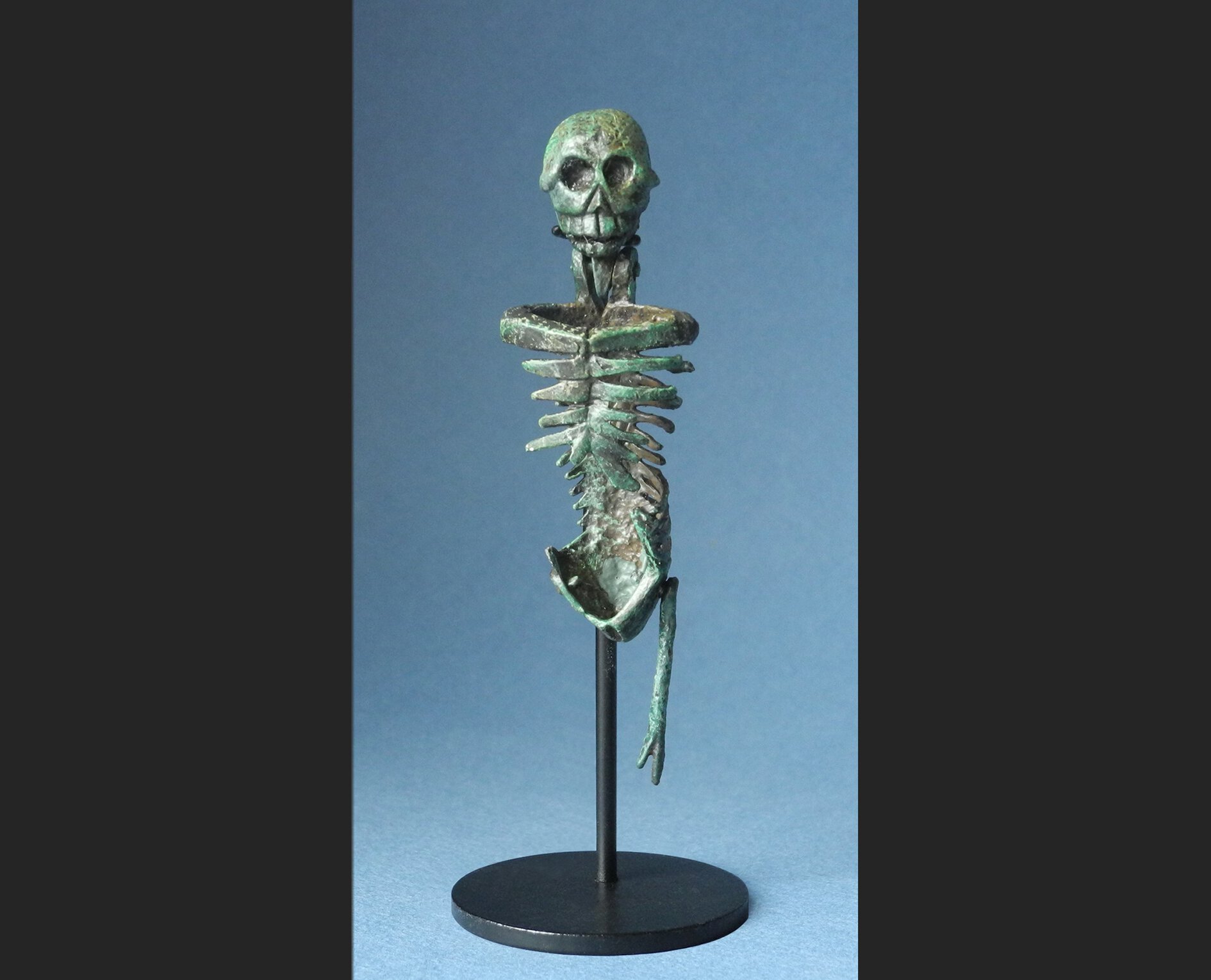
Roman miniature, Larva Convivalis
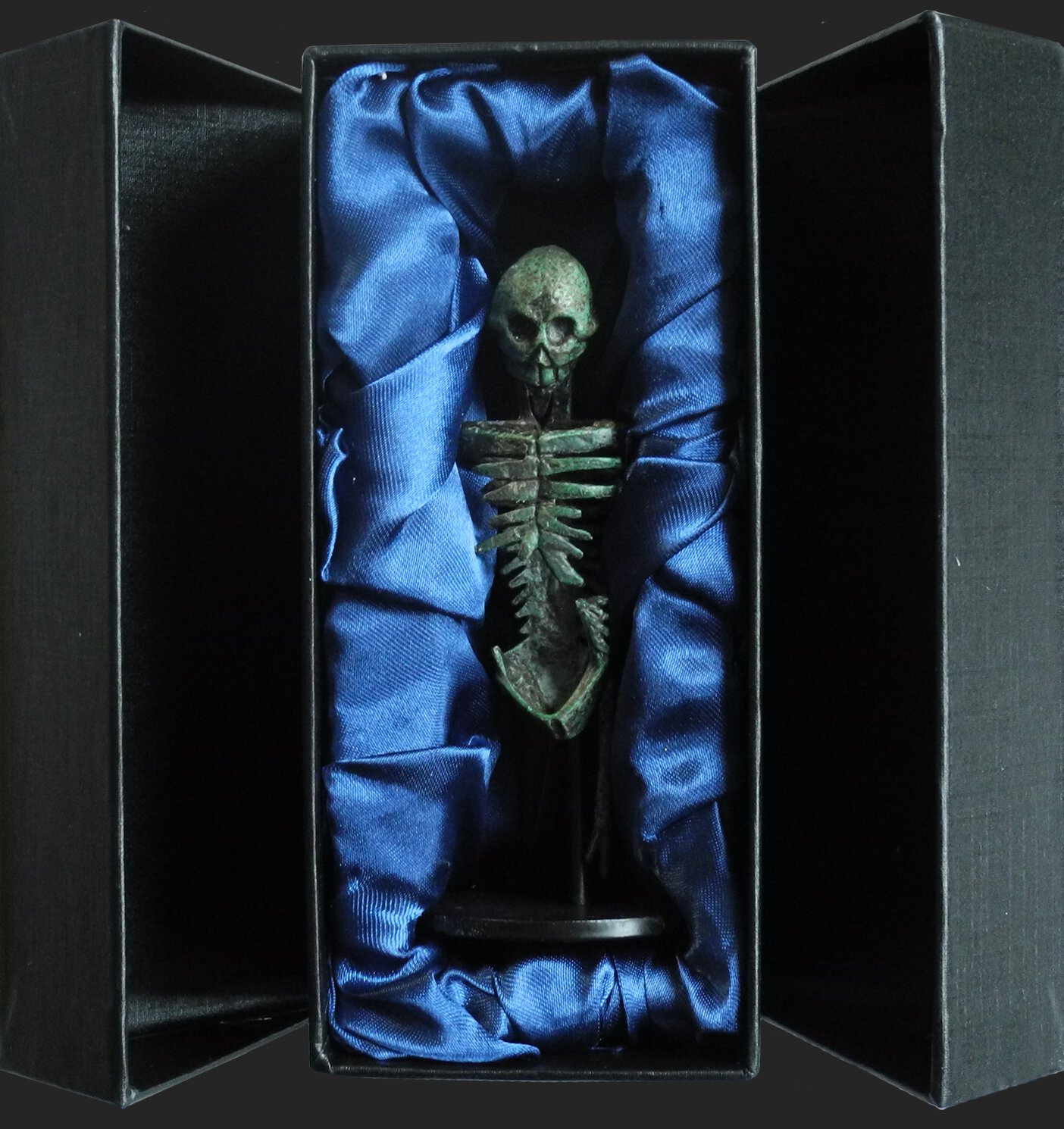
h. 11 cm. (metaal) with brochure in luxury gift box
Description
Made of bronze, 1st century Roman articulated skeleton in the collection of the Getty Museum features round eye sockets and a wide, grinning mouth with large upper teeth. Its arms now missing and only the upper part of one leg remaining, the skeleton, referred to by the Romans as larva convivalis, meaning banquet ghost, was once made to jump and dance and was a reminder of the brevity of human life. and necessity of profiting from the short time which remained. In Petronius’ satirical novel, The Satyricon (A.D. 60s), Trimalchio, the crass, nouveau- ich host of a dinner party, brings out a small skeleton between courses. With its flexible joints, Trimalchio poses the skeleton in various ways, and recites a poem to the affect that life is short and should be enjoyed before becoming a skeleton like the one on display. He declares “Alas for us poor mortals. Thus we shall be, after Hades takes us away. Therefore, let us live while it goes well with us.”
In total, there are ten similar skeletons that are known to exist, one in silver, one in wood, and the remaining in bronze. All of the skeletons have much in common stylistically. The unanatomical rendering of the bones, a feature shared by all the skeletons, reveals the artists’ and craftsperson’s lack of scientific accuracy. It was perhaps more important that the bony specters were lively; hence; their articulation and resulting fluid and dancing movements were emphasized.