






Larva Convivalis
4 December 2023
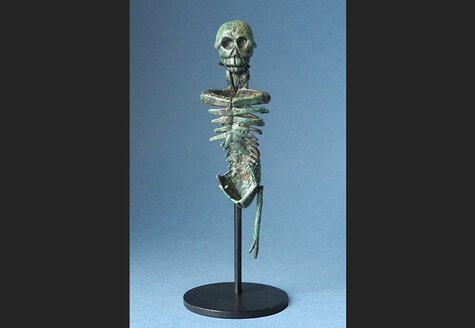
This miniature 1st-century Roman from the collection of the Getty Museum features round eye sockets and a wide, grinning mouth with large upper teeth. It was known to the Romans as larva convivalis, meaning banquet ghost. It was once made to (between courses of a meal) jump and dance and was a reminder of the brevity of human life and necessity of profiting from the short remaining time. In total, ten similar skeletons are known, one in silver, one in wood, and the remaining examples in bronze. The unanatomical rendering of the bones, a feature shared by all the skeletons, reveals that artists' lack of scientific accuracy. It was perhaps more important that the bony specters were lively and so the fluid fluid dancing movements of their mobile joints were emphasized. (ROM01 – h. 10 cm.)