





The Tosho-gu monkeys
14 October 2015
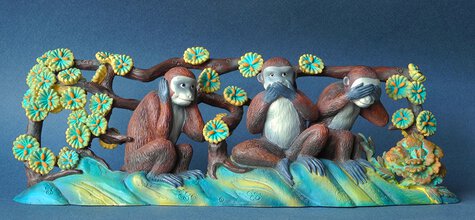
(JAP03) The famous three wise monkeys have been popular in Europe for over a century, but their origins lie much further back in time. In the sixth century B.C., the Chinese sage Confucius taught his pupils to: “Look not at what is contrary to propriety; listen not to what is contrary to propriety; speak not what is contrary to propriety; make no movement which is contrary to propriety". This rule for life was also used in the 11th century by the Koshin movement in Japan that had its roots in Chinese Taoism. The decision to depict this rule as three monkeys dates back to the 15th century and is based on typically Japanese wordplay: Mizaru, Kikazaru, Iwazaru means “See nothing, hear nothing, say nothing”. The suffix zaru makes the verb negative and sounds like the word for monkey, saru.